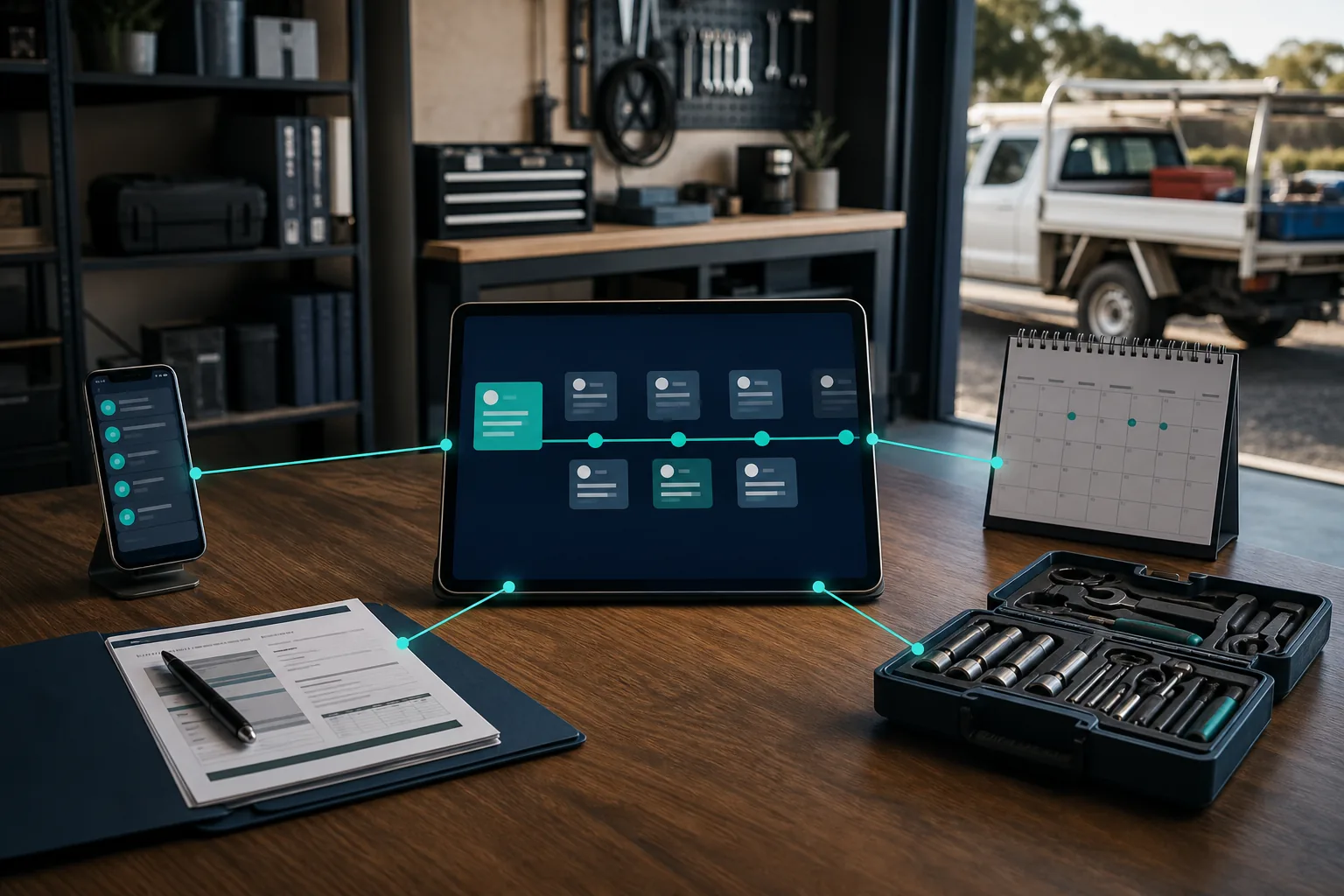
Short answer: a CRM is one place that remembers every customer and chases every quote so you don't have to. The name is the worst thing about it. The idea is the office manager you can't afford yet, working nights and weekends, in software form.
Before I ran businesses I was a lawyer, and law firms have a rule that sounds bureaucratic until you've seen it save someone's skin: if it's not in the file, it didn't happen. Every call, every promise, every "leave it with me" goes in the file, because memory is a liability and the file is the truth.
A CRM is that rule, applied to your whole business. That's genuinely the entire concept. The letters stand for "customer relationship management," which explains nothing and scares everyone, so from here on let's just call it the file.
It's your phone, a notebook in the ute, three inboxes, some texts from customers whose names you didn't save, and your memory. That setup works surprisingly well, right up until the week you get busy. And busy is precisely when the expensive mistakes happen, because busy is when memory drops things. Not the cheap things either. Memory has a talent for dropping the $8,000 quote and remembering the $80 one.
It won't fix bad work, wrong pricing, or a suburb with no demand. It also will not run itself, and this is the part the software ads skip: someone has to set it up around your actual business, write the messages, connect the phone and calendar, and keep it tuned. An empty file helps nobody, and a file nobody updates is worse than no file, because you trust it. Most abandoned CRM subscriptions die exactly there, which is why the DIY-versus-done-for-you question matters more than the brand you pick.
Skip the feature comparisons. Ask yourself these instead. One: in the last month, did a quote go unchased or a call go unreturned? Two: if you took two weeks off, would anything fall over? If either answer is yes, the file has outgrown your head. You're running a growing business on a filing system built for a smaller one, and it leaks money at the exact rate you grow.
We build the file for you, fill it automatically, and run it: that's the done-for-you version for tradies. Or start with the free audit and find out what's currently falling out of the file you don't have. It did not happen, remember. That's the problem.
The free audit shows exactly where enquiries are being lost in your business right now, and what fixing it would look like. No cost, no obligation, no pressure. Worst case, you walk away knowing your numbers.
Takes 30 seconds & get an instant demo of the system.